Written by Arouba Kabir, Counselling Psychologist & Founder, Enso Wellness · 8 min read
You get up. You go to work. You are good at your job. You reply to messages, you show up to the birthday dinner, you are the person others come to when they are struggling. Nobody in your life would describe you as depressed.
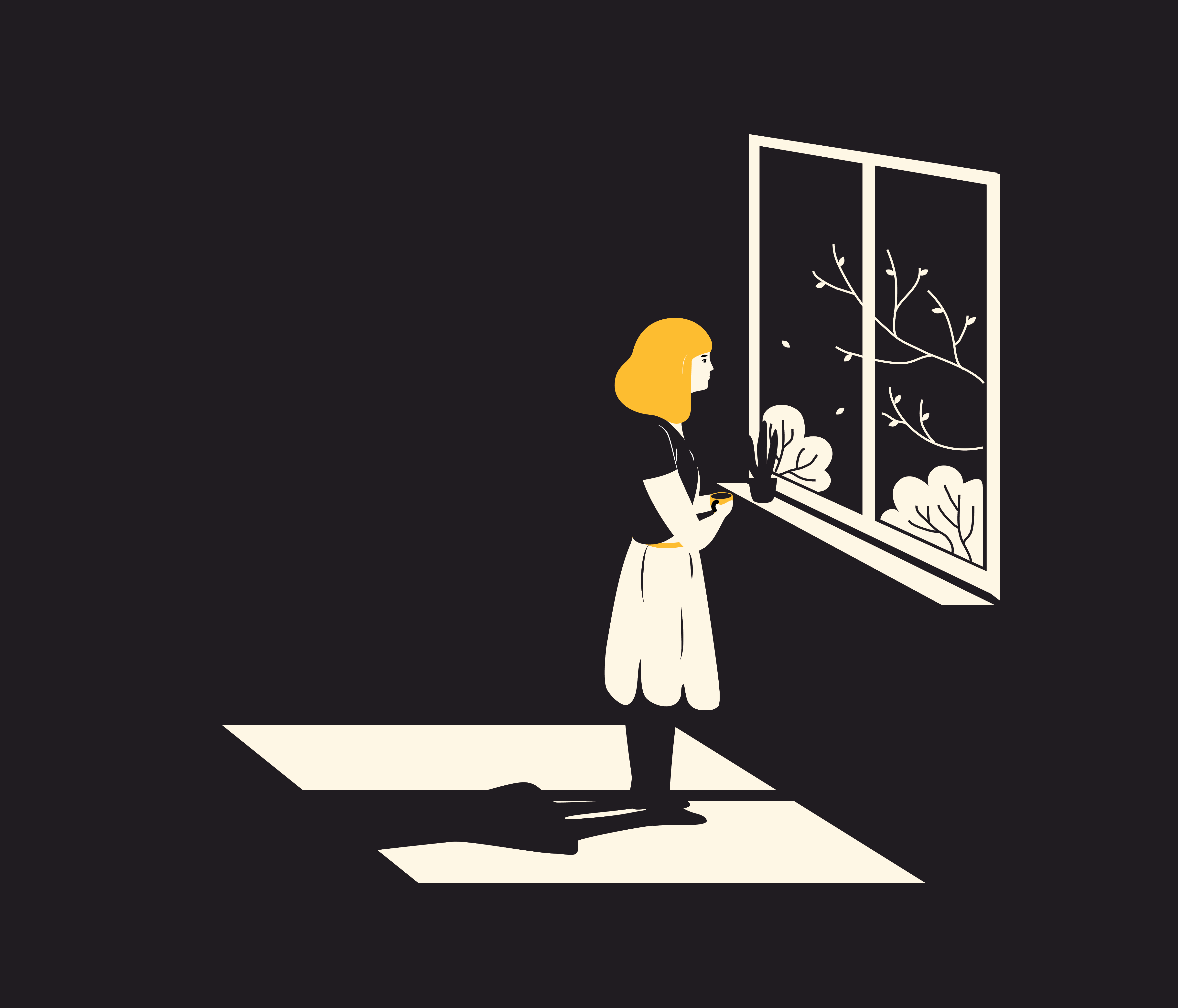
And underneath all of it, something has gone quiet. Not agony — flatness. A sense of watching your own life through glass. You cannot remember the last time you genuinely looked forward to something, and you have stopped expecting to.
This is not you being ungrateful or dramatic. It has a name, and it is one of the most under-recognised presentations in mental health.
Key takeaways
- “High-functioning depression” is not a formal diagnosis but usually describes persistent depressive disorder (dysthymia) — a low-grade depression lasting two years or more.
- Because functioning is preserved, it is routinely missed by families, doctors and the person themselves.
- Burnout is depletion — you want things but have nothing left. Depression is flatness — the wanting itself has gone.
- “I have no reason to feel this way” is one of the most common sentences said in a first session, and it is not a disqualification.
- Chronic low-grade depression responds well to treatment, but people typically wait years because they do not feel bad enough to justify asking.
- You do not need to be falling apart to deserve help.
What it actually is
“High-functioning depression” is a colloquial term rather than a clinical one. What it usually maps onto is persistent depressive disorder — previously called dysthymia — a depression of lower intensity but much longer duration. To meet the criteria, low mood must have been present more days than not for at least two years.
Two years is the part people miss. This is not a bad month. It is a slow adjustment of your baseline, so gradual that by the time it is entrenched, you no longer remember a different setting to compare it to. Many people describe it not as an illness that arrived but as a personality they assumed they had.
Major depression is a storm. This is a climate. You stop noticing the weather when it never changes.
Some people also experience episodes of major depression layered on top of this baseline — sometimes called double depression. And critically, a lower intensity does not mean lower impact. Because it runs for years rather than weeks, the cumulative cost to careers, relationships and self-concept is frequently greater than that of a shorter, more visible episode.
Why nobody notices — including you
Our shared picture of depression is someone unable to get out of bed. That image is accurate for some people and completely useless for everyone else.
If you are high-functioning, the depression has an unusual amount of camouflage available:
- Achievement hides it. Nobody investigates the person who is delivering. Competence is treated as proof of wellbeing.
- Work becomes both symptom and shield. Overworking is one of the most common ways to avoid noticing internal emptiness, and it is the one form of avoidance that gets you promoted.
- You are the reliable one. If your role in your family or friend group is the steady person others lean on, there is often no slot available for you to occupy the other position.
- Cultural framing. In many Indian families, low mood is read as weakness, ingratitude, or a phase — and the standard prescription is to be busier, more grateful and less introspective.
- You have recalibrated. This is the most powerful concealment of all. After enough years, flat feels normal. You do not report it because you do not experience it as a change.
The signs that actually show up
Rarely tears. Much more often:
Anhedonia — the disappearance of pleasure
The clearest marker. Things you used to enjoy now produce a neutral signal. You still do them, out of habit or obligation, and note privately that they are not landing. Holidays, music, food, sex, friends — present, unfelt.
Emotional flatness in both directions
Not just less joy — less of everything. People describe not being able to cry at a funeral, or feeling only mild interest at news that should have been thrilling. The range has narrowed at both ends.
Persistent, low-grade self-criticism
A running commentary so constant that it stopped sounding like criticism and started sounding like accuracy. Not I made a mistake but I am the kind of person who would.
Fatigue that is not about sleep
Getting through an ordinary day requires visible effort. You are managing, but you can feel yourself doing it.
Social performance followed by collapse
You are warm, funny and engaged at the gathering — and then you sit in your car afterwards, unable to move, wondering why something enjoyable took so much out of you.
Irritability
Frequently the only externally visible symptom, and consistently misread as temperament. Short fuse, disproportionate reaction to small frictions.
A shrinking future
You stop making plans more than a few weeks out. Not from despair — from a quiet, unexamined assumption that it will feel the same then as it does now.
One question worth sitting with
When did you last look forward to something? Not enjoy something — anticipate it. If you cannot locate a recent instance, that is worth paying attention to.
“But I’m functioning fine”
Functioning is not the same as being well. If something has felt flat for a long time, that is reason enough to talk to someone.
Book a ConsultationBurnout or depression?
These get confused constantly, including by clinicians, and the distinction changes what helps.
| Burnout | High-functioning depression | |
|---|---|---|
| Core experience | Depletion — running on empty | Flatness — the fuel gauge is irrelevant |
| Source | Tied to a context, usually work or caregiving | Present across all contexts |
| Desire | You still want things; you lack capacity | The wanting itself has faded |
| Response to rest | A real holiday helps noticeably | A holiday changes the scenery, not the feeling |
| Self-view | “I cannot keep doing this” | “There is something wrong with me” |
| Duration | Builds over months, tied to load | Years, often no clear starting point |
The most useful diagnostic question is the holiday test. Take a genuine two-week break with no work contact. Burnout lifts appreciably. Depression travels with you — and the fact that it does, in a beautiful place you paid for, often becomes its own source of guilt.
They also co-occur. Prolonged burnout is a recognised risk factor for depression. Many people arrive with both and need the work and the mood addressed separately.
“But I have no reason to feel this way”
Said in first sessions more often than almost any other sentence, usually by people with stable jobs, functional families and no obvious catastrophe in their history.
Two things are worth saying plainly.
Depression does not require a reason. It involves neurobiology, genetics, temperament, chronic stress and sleep among other factors. Requiring a justification before allowing yourself to feel unwell is like requiring a justification for a migraine.
And there is usually more reason than you are giving yourself credit for. The absence of a single dramatic event is not the absence of cause. Chronic low-level invalidation. A childhood in which achievement was noticed and feelings were not. Years of suppressing what you actually wanted in order to remain acceptable. Loneliness inside a full calendar. Grief that was never given room. None of these look like reasons from the outside. All of them are.
The demand that suffering justify itself is itself a symptom.
What helps
Therapy
Persistent depressive disorder responds well to psychotherapy. Cognitive behavioural approaches work on the entrenched thought patterns; interpersonal therapy works on relationships and role transitions; psychodynamic and schema-based work is often valuable here specifically because the pattern is long-standing and identity-level rather than situational.
Medication, considered honestly
For chronic depression, medication is frequently useful, and combined treatment tends to outperform either approach alone. A common objection deserves addressing: I do not want to be artificially happy. That is not what antidepressants do. In the best case they raise the floor enough that you can feel things again — including difficult things. Worth a psychiatric consultation, which carries no obligation to start anything.
Behavioural activation
Counter-intuitive but well supported: in depression, motivation follows action rather than preceding it. Waiting to feel like doing something means waiting indefinitely. Small, scheduled, deliberately unambitious activity — a fifteen-minute walk, one call to a friend — done regardless of desire, gradually restores the capacity to want.
The unglamorous foundations
Consistent sleep timing. Daily movement — the evidence for exercise in mild-to-moderate depression is genuinely strong. Sunlight. Not being alone all day. Reducing alcohol, which reliably worsens this over time even as it appears to help at 10pm.
Get the medical basics checked
Thyroid function, vitamin B12, vitamin D and haemoglobin. All common deficiencies in India, all capable of producing exactly this presentation, all simple to correct.
Read next
You don’t have to earn the right to get help
Enso Wellness works with people who look entirely fine from the outside and have not felt like themselves for years. There is no threshold you need to cross first.
Contact Enso WellnessFrequently asked questions
Is high-functioning depression a real diagnosis?
It is not a formal diagnostic category, but it usually describes persistent depressive disorder (dysthymia) — a chronic depression of lower intensity lasting two years or more, in which day-to-day functioning is largely preserved. The absence of a formal label does not make the experience less real or less treatable.
How is high-functioning depression different from burnout?
Burnout is depletion tied to a specific context, usually work or caregiving — you still want things but have no capacity. Depression is flatness that travels across every context, in which the wanting itself has faded. A useful test: a genuine two-week break noticeably helps burnout, but depression comes with you.
Can you be depressed and still be successful at work?
Yes, and it is common. Achievement often masks depression rather than ruling it out, and overworking is one of the most socially rewarded ways to avoid noticing internal emptiness. Many people with chronic low-grade depression perform well for years before anyone, including themselves, recognises what is happening.
What are the signs of high-functioning depression?
The most consistent sign is anhedonia — things you used to enjoy no longer register. Others include emotional flatness in both directions, persistent low-grade self-criticism, fatigue unrelated to sleep, irritability, exhaustion after social events, and a gradual loss of the ability to look forward to anything.
Do I need medication for high-functioning depression?
Not necessarily. Psychotherapy alone is effective for many people. For chronic depression, combined therapy and medication often produces better results than either alone. A psychiatric consultation can help you decide and does not commit you to starting medication.
Should I see someone if I’m still managing everything?
Yes. Functioning is not the same as being well, and waiting until you can no longer cope means living with something treatable for far longer than necessary. Persistent depressive disorder responds well to treatment; the main obstacle is that people delay for years because they do not feel unwell enough to justify asking.
References
- American Psychiatric Association — Diagnostic and Statistical Manual of Mental Disorders (DSM-5-TR), persistent depressive disorder.
- World Health Organization — ICD-11 classification of depressive disorders and fact sheets on depression.
- National Institute for Health and Care Excellence (NICE) — guideline on depression in adults: treatment and management.
- Cuijpers, P. et al. — meta-analytic research on psychotherapy, pharmacotherapy and combined treatment for chronic depression.
- World Health Organization — ICD-11 definition of burn-out as an occupational phenomenon.
- National Institute of Mental Health and Neurosciences (NIMHANS) — National Mental Health Survey of India, on prevalence and the treatment gap for depressive disorders.
This article is for information and reflection. It is not a substitute for personalised mental health care. If you are in distress or at risk, please reach out to a qualified professional or call Tele-MANAS at 14416 (India, 24×7).