
When Words Are Not the Only Way In
Sometimes you understand what is happening in your mind, but your body still feels tense, restless, shut down or on alert. At other times, an experience feels too complicated – or too new – to explain clearly.
At Enso Wellness, therapy can include gentle body awareness and creative expression alongside conversation. These practices offer additional ways to notice, explore and communicate what you are experiencing, without expecting you to find the perfect words.
There is no pressure to move, make art or share anything before you are ready. Your therapist will work with your preferences, needs and pace.
Online sessions • Collaborative • Starting at ₹2,500 • Trauma-informed care
At Enso, we believe that emotional experiences are not understood through thoughts alone. They can also be noticed in the breath, posture, energy, movement, tension and sense of safety.
This does not mean that every sensation has a hidden meaning. It means the body can offer useful information about how you are responding in the present moment.
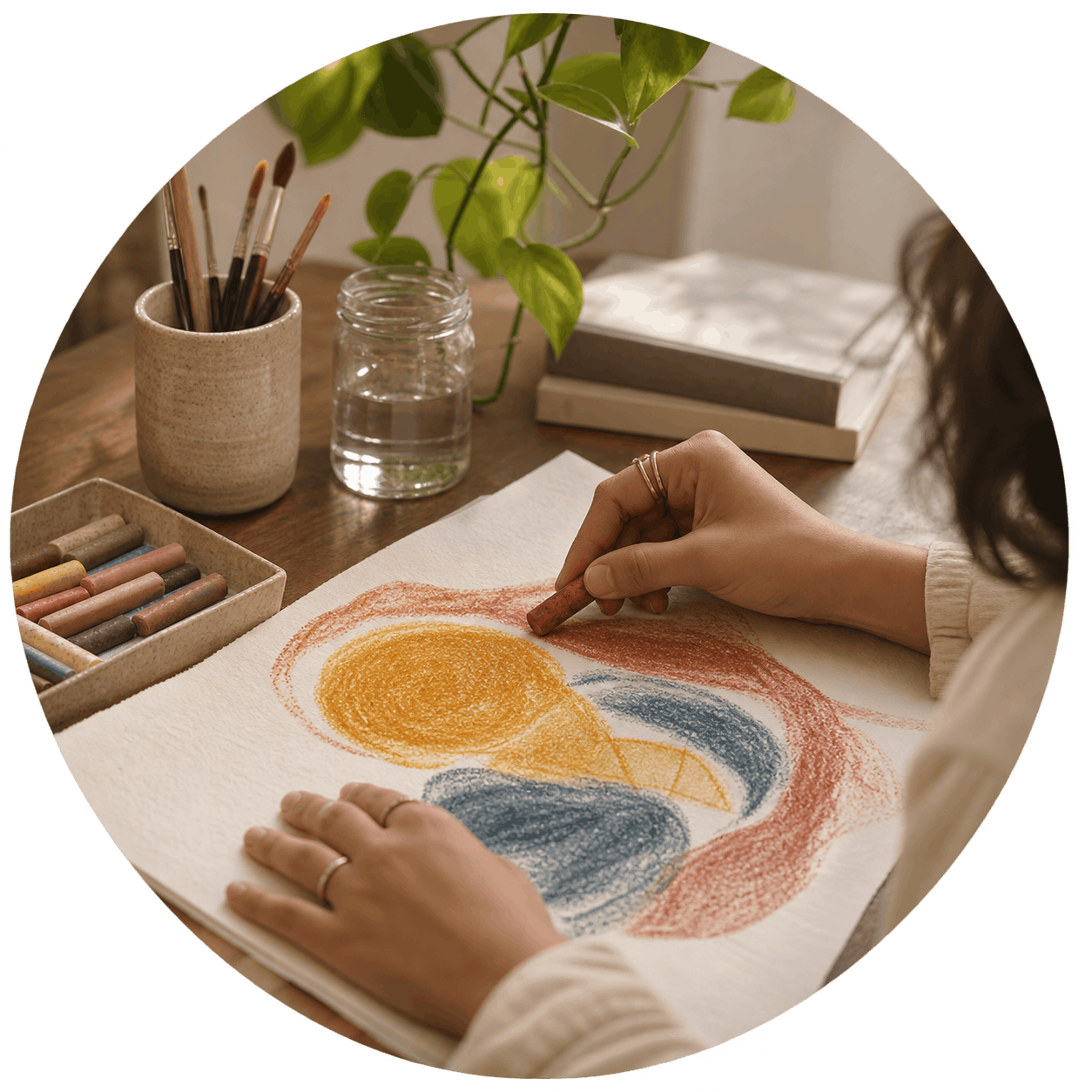
Creativity can offer another language. A line, colour, image, metaphor or piece of writing may help you approach something that feels difficult to explain directly. The value is not in producing “good art.” It is in noticing what the process makes possible for you.
Conversation remains an important part of therapy. Somatic-informed and expressive arts-informed practices simply widen the range of ways you and your therapist can work together.
These practices are not used in every session or with every client. Your therapist will consider what feels relevant, safe and appropriate for you.
“Somatic” simply refers to the body. In a somatic-informed session, your therapist may invite you to notice physical sensations connected with the present moment – such as changes in breathing, muscle tension, temperature, energy or the urge to move or become still.
The aim is not to search for a dramatic release. It is to build awareness, recognise what helps you feel steadier and explore the relationship between your emotions, thoughts and physical responses.
A session might include:

Some experiences become clearer when they are approached through image, colour, symbol, story or metaphor. Expressive arts-informed therapy may bring simple creative exercises into a regular counselling session to support reflection and communication.
You do not need to be artistic. Your work is not judged, scored or displayed. The therapist does not decide what an image “must mean.” Together, you stay curious about what the process and the finished piece mean to you.
A session might include:
Body-aware and creative practices may be useful when words feel incomplete, emotions feel difficult to identify, or insight alone has not changed how an experience feels. Depending on the person and the therapist’s training, they may support work around:
Stress, anxiety and emotional overwhelm
Burnout, numbness or feeling disconnected from yourself
Difficulty identifying, tolerating or expressing emotions
Grief, loss and significant life transitions
Self-esteem, identity and body-image concerns
Relationship, attachment and boundary patterns
Trauma-related responses, when approached by an appropriately trained professional
Experiences that feel easier to explore indirectly
A wish for greater self-awareness, creativity or personal growth
No approach works for everyone. Your therapist will consider your history, current needs, level of risk and personal preferences before suggesting an exercise.
Can this work online?
Yes. Many body-awareness and creative practices can be adapted for online therapy. You may be invited to notice your surroundings, use simple materials already available to you, write, draw, move gently within your space or reflect through imagery and metaphor.
Do I need to be good at art?
Not at all. Expressive arts-informed practices are about exploration, not artistic skill. There is no correct way for the result to look, and your work is not judged.
Will my therapist interpret my drawing?
Your therapist should not impose a fixed meaning on your artwork. They may ask what you noticed, what an image means to you or how the process felt. Your understanding remains central.
Will I have to move or focus on my body?
No. Body-aware practices are invitations, not requirements. You can decline, adapt or stop an exercise at any point and continue through conversation instead.
Is this the same as formal art therapy?
No. Enso uses the term “expressive arts-informed practices” for creative exercises integrated into counselling. Formal art therapy is a specialised professional discipline with its own training requirements.
Is somatic-informed therapy a massage or hands-on treatment?
No. The work described on this page involves psychological therapy and awareness-based practices. Enso does not imply hands-on bodywork through this service.
Can these approaches help with trauma?
They may support some people working with trauma-related responses when used carefully by an appropriately trained therapist. They are not automatically suitable for everyone, and they should not replace a personalised assessment or other indicated treatment.
What if an exercise feels uncomfortable or overwhelming?
Tell your therapist if you can. You can pause or stop at any time. A trauma-informed therapist can help you reorient to the present, adjust the activity and review what would feel safer.
Are these practices used in every session?
No. They are options within therapy, not a fixed programme. Some sessions may be entirely conversational, while others may include a short body-awareness or creative exercise.
What materials do I need for an online session?
Usually nothing specialised. If your therapist plans a creative activity, they may suggest simple materials such as paper, pens, pencils or colours in advance.
How do I know whether this approach is right for me?
You can discuss your interests, concerns and boundaries during a consultation or first session. Your therapist can explain what they are trained to offer and decide with you whether an experiential approach feels appropriate.
These practices are not used in every session or with every client. Your therapist will consider what feels relevant, safe and appropriate for you.
You do not need to arrive with the right words, a clear explanation or any experience with creative or body-aware practices. Therapy can begin with whatever feels possible today.
We can help you connect with a therapist whose approach fits your needs, preferences and pace.
Reach out with just a call or click.
Pair up with a practitioner who resonates with your needs.
Experience the effects of somatic or arts expressive informed work in a calm, supportive setting.
Sessions typically last between 50 to 60 minutes and can be done in person or remotely.
Online sessions • Collaborative • Starting at ₹2,500 • Trauma-informed care
