
Prepare For The Relationship You Are About To Build
A wedding may be planned in a few months. A partnership is built over years, through conversations, decisions, misunderstandings, affection, repair and everyday life.
Premarital coaching and counselling gives you a private, guided space to understand one another before those conversations become urgent. We help couples build trust, speak more honestly, handle differences with care and enter marriage with a clearer sense of how they want to live as a team.
For many adults, a committed romantic partnership becomes one of their closest emotional relationships after the bond they first experienced with parents or caregivers. That closeness can bring comfort and belonging. It can also activate old fears about rejection, abandonment, criticism, control or not being enough. Understanding these reactions before marriage can help a couple respond to each other with more care instead of treating every trigger as proof that the relationship is failing.
The programme is available online for couples preparing for love marriages, arranged marriages and relationships that do not fit a single traditional path. You can begin even when the wedding is only two months away.
Online sessions • Culturally aware • LGBTQIA+ affirming • Trauma-informed care
Four-session programmes start from ₹12,000. The final fee depends on the practitioner selected.

No one enters a relationship as a blank page. We bring what we learned about love, closeness, conflict and safety in our earliest relationships. We also bring experiences from friendships and past romantic relationships, including moments of betrayal, rejection, comparison, loss or shame.
These experiences may influence what we expect from a partner and how we react when the bond feels uncertain. People often describe these tendencies as attachment patterns. They are not fixed personality types or excuses for hurtful behaviour. They can change as people understand their triggers, experience safer relationships and practise new responses. Premarital sessions help each partner recognise the pattern without blaming themselves, their parents or each other.

A partner’s past can sometimes become a source of comparison, jealousy, mistrust or repeated questioning. The difficulty may involve a previous relationship, sexual history, an earlier engagement, a friendship, family experiences or a part of life that one partner finds hard to understand.
The aim is not to force disclosure of every detail or ask someone to prove that the past no longer matters. The couple learns to separate information that is relevant to the present relationship from questions driven by fear or comparison. They can discuss what honesty means to each of them, what privacy remains appropriate, what reassurance is reasonable and how to stop using past experiences as a weapon during conflict.
Many couples prepare for the visible parts of marriage. They discuss the wedding, where they will live, careers, finances and adjustment with in-laws. These conversations matter. Yet the quality of the bond between two people often determines whether they can handle those decisions together.
When a couple can be vulnerable without feeling mocked, dismissed or punished, they can speak about difficult subjects more clearly. When they trust that the other person will take their experience seriously, differences do not have to become a contest between families or a test of loyalty. They can look at the problem together.
This is the focus of our premarital work. We help you understand the relationship you already have, identify the patterns you are carrying into marriage and practise ways of communicating that you can return to when life becomes more demanding.
The programme is tailored to the couple. You do not need to cover every topic, and you do not need to agree on everything. The purpose is to understand each other’s expectations and develop a way to make decisions together.
Conflict
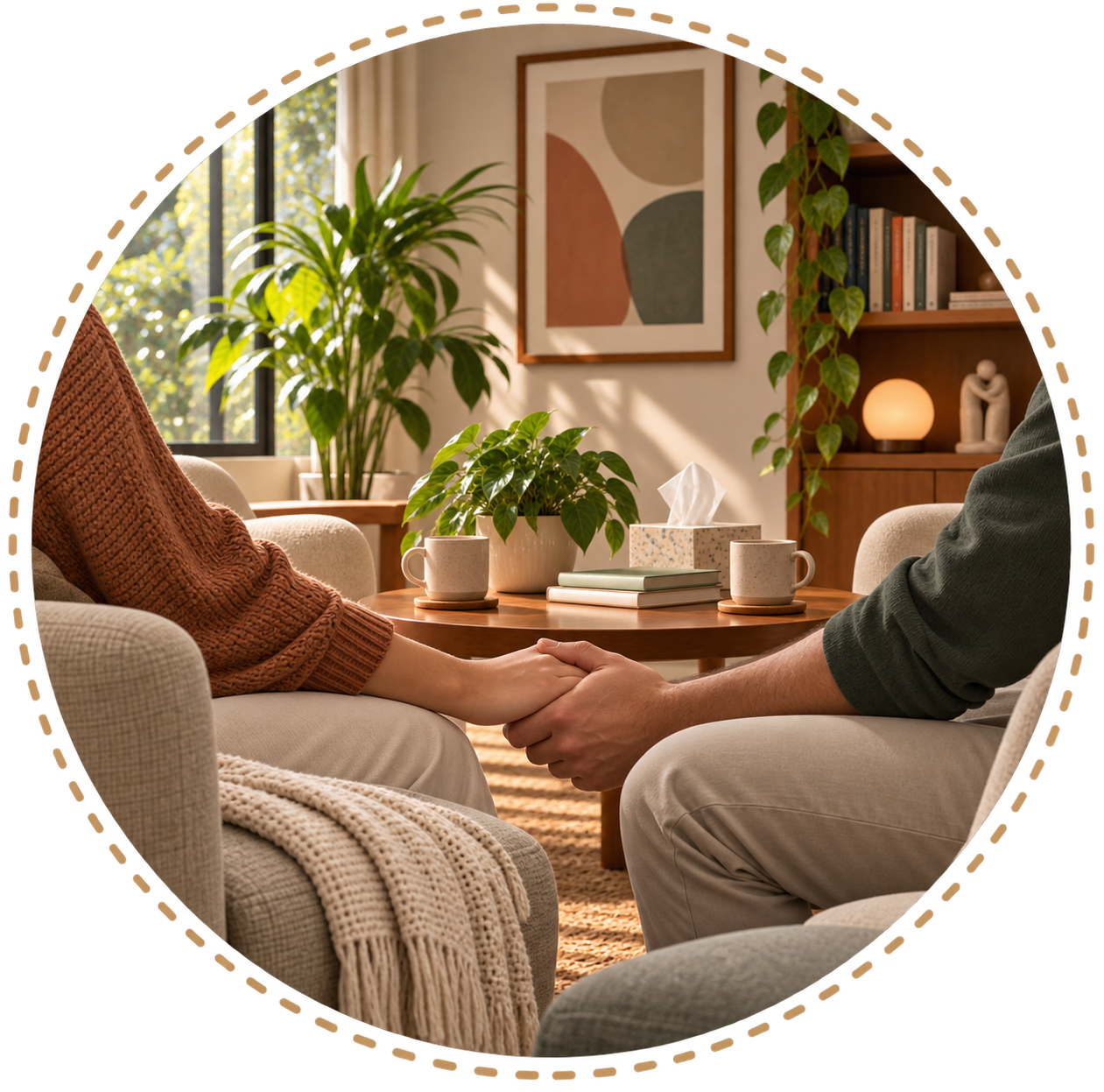
Therapy can be a space to understand each other better, strengthen your relationship and navigate important transitions together.
Vulnerability is the ability to speak honestly about fear, hurt, desire, doubt or need without the conversation becoming unsafe. Couples learn how to listen without immediately defending themselves, how to ask questions before making assumptions and how to respond when a partner shares something difficult.
Trust grows through repeated experiences of reliability, honesty, respect and repair. The sessions help couples make their expectations more visible and notice the small behaviours that strengthen or weaken trust over time.
Chemistry is more than initial attraction, and it cannot be manufactured or guaranteed. Emotional closeness can deepen when two people remain curious about each other, express affection in ways the other person can receive, share play and tenderness, and repair moments of disconnection.
The aim is not to create a relationship without disagreement. Couples learn to recognise the pattern underneath an argument, slow down escalation, express a complaint without attacking character and return to the conversation after emotions settle. Repair matters because unresolved hurt tends to reappear in a new argument.
Marriage brings two individuals and often two family systems together. A couple needs room to develop its own ways of deciding, celebrating, resting, spending, caring and relating. This shared identity does not erase either person or either family. It gives the relationship a centre of its own.
Some couples worry that counselling will uncover a problem and tell them they should not marry. That is not the purpose of the programme, and a practitioner does not make the decision for you.
The sessions help you see where you already understand each other and where assumptions have taken the place of conversation. A difference does not automatically mean incompatibility. Often, it becomes easier to work with once both people understand what it means, why it matters and what each person needs.
At times, the work may bring a serious concern into focus. Knowing about it gives both people a chance to respond thoughtfully, seek further help or make an informed decision. Avoiding it does not protect the relationship.
Programme fees depend on the practitioner selected. Individual sessions are priced at ₹2,500, ₹3,000 or ₹6,000. Couple sessions are priced at ₹3,500, ₹5,000 or ₹10,000.
Each session is 90 minutes. GST is not applicable. All sessions are available online, so both partners can join from the comfort and privacy of home.
For any other queries, reach out to us via the WhatApp icon on the bottom right of your screen.
From meeting your therapist to understanding your needs, we’ll help you take the first steps together.
Share what you’re looking for, where you are in your relationship and what you’d like support with.
We help you connect with a therapist based on your concerns, preferences, availability and support needs.
Your therapist will make space for both perspectives, understand the relationship dynamic and any concerns, in individual and joint sessions.
Together, you review what's changed, what remains difficult and whether the balance of individual/joint sessions or the goals need to shift.
